A few weeks ago, my friend gave me tickets to a play his brother had worked on, called Club Life. The show was written and performed by Fred Deakin, a club master by trade and one-half of the electronic duo Lemon Jelly. I knew there would be dancing, but beyond that I couldn’t give my friends anything about what the show might be like because I had no idea myself. It was the end of a long week and the morning after an even longer evening, and I’m sure my friends felt obliged to go out of novelty.
Club Life is an immersive retelling of Fred’s own “club life.” The audience is taken through nights from his past, in the ’80s and ’90s, with Fred spinning tracks on the decks at the back of the stage. For each club night revisited, a cast of performers become the dancers of that moment. It’s a delicate mix of rehearsed and reactive. As the show progresses, the line between the stage and the stalls blurs, and you all become part of Fred’s club. We’re seduced onto the floor, bringing our friends with us to act out the awkward yet intimate experience of one’s first house party or Misery, the worst club night ever. The floor is yours to make of it what you will.

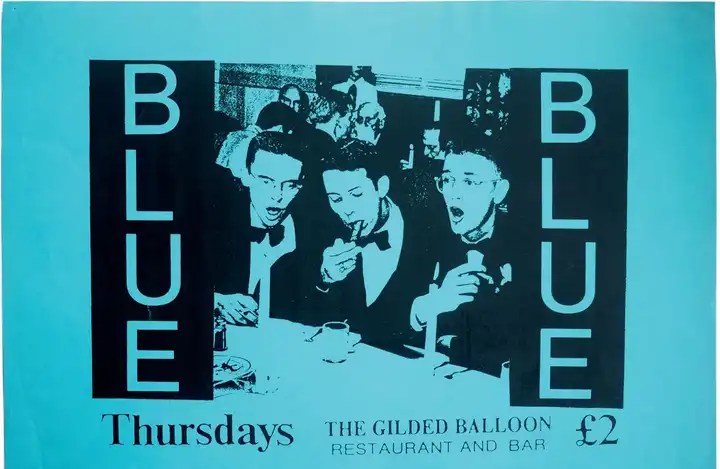
Fred Deakin’s poster for Misery, the worst club night ever, 1991-94
At first, the show might seem like somewhat indulgent nostalgia. But the longer we sat through the performance, it shifted from a show about someone’s life through music to something more universal. Fred and his crew built their own tiny time machine in Clapham’s Omnibus Theatre, taking us back through his life – and, in a way, our own. My life has not been a ‘club life’ to say the least, but I found my own stories on Fred’s dance-floor. What Club Life actually was, was a beautiful, surprising, and humbling exploration of what it means to be human.
What is our purpose?
What do I have to give to the world that’s useful?
On the way out, I bought a book of Fred’s club posters and writings about the show. I read it in the taxi home and then went to meet a friend at her work. I sat with a beer and thought about what I had seen. I went in with no expectations, and Club Life was the most electric surprise – one that, on reflection, I really feel I needed. I felt so energised by what I had seen; as if there was now this urgency to finding my own voice that I hadn’t tapped into yet. This is why art is the greatest gift we can give to ourselves, because only when we step into each others shoes can we see the cross-sections of our own lives. In taking in these moments—when we seek out experiences, art, or books that seem to run opposite to our interests—that we find something truly remarkable. It’s the most interesting feeling, like your brain has been turned upside down. New things appear, and you have to check your ego, which assumed you knew what you were in for in the first place.

 lonely disco dancer