Crafting an ‘art-time’ on the archival kentish coast
Photographs by Jakob Icke – @jjjjjjjakob
“I am wandering aimlessly in this labyrinth of memories.”
Derek Jarman, Modern Nature
Art both creates and documents its own moment.
Through art, we shed a linear, archival history, introducing a temporal glitching, where different epochs meet and inform each other.
These relics we produce embed ourselves in a sort of ‘Art-Time’, a portal through which past, present and future face each other gleefully, folding time in on itself.
This writing is a product of Derek Jarman’s labyrinth of memories, an embodiment of this temporal folding it searches for.
We produce and reproduce our own history.
A glorious loop of nostalgic grief.

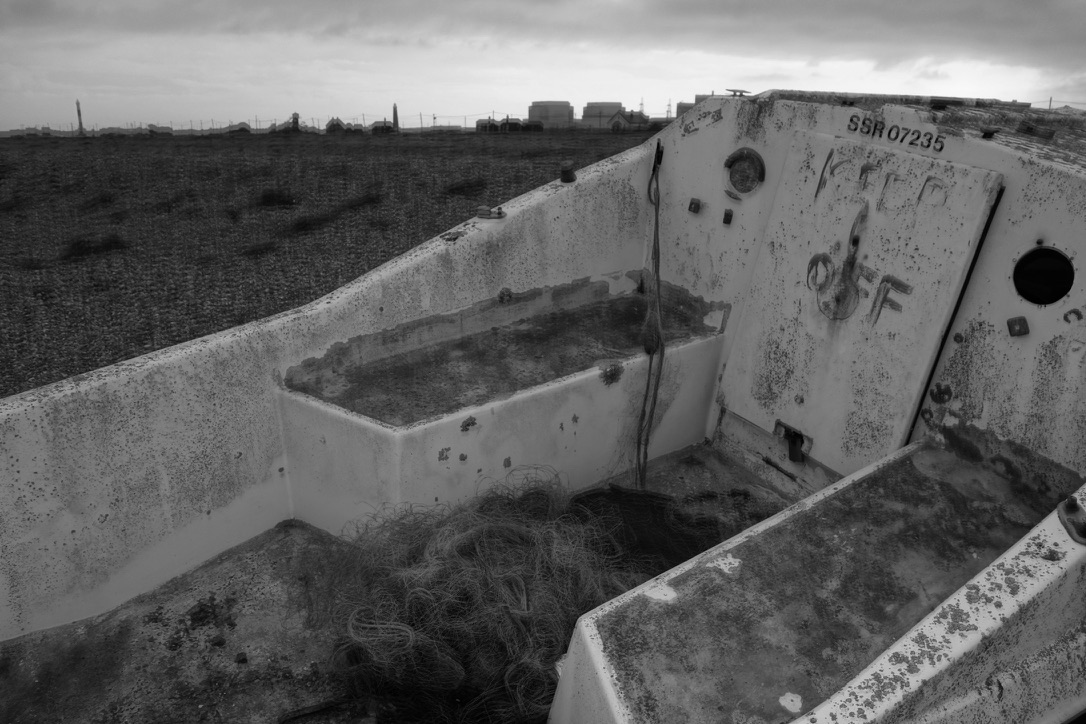
Dungeness it seems creates its own temporal glitch, where past, present and future collide in one deserted, apocalyptic utopia. To wander through it is to wander between the beached boats on the shingle, rusting and hollow, for whom it’s been weeks or months since the feel of the sea. If this labyrinth is one of memory, these boats keep the rhythms of the fisherman and their kin, the ebb and flow of the tides and the feel of the water on their stern. Humming on the horizon is a decommissioned power station, watching over clusters of cottages dotted along shingle track, decorated from the outside with shells picked up on the beach. There is evidence of life, but until now I had not really seen it. I cycle my bike along the estate with my laptop and cheese sandwich in a paneer, tracking the divots of time along the shoreline. Like the boats, I gather knowledge with my body, and my bike.
The first colour to spread across the shingle here is the Crambe Maritima, the first sea kale of Spring. Vivid purple leaves sprout from their rhizome, after a long Winter below the surface. Come Summer, the Crambe Maritima will dot the landscape with wildflowers, less vibrant but equally vital in their role as seed distributors, ensuring the plant’s propagation across the beach. You can feel the motion of the sea kale, a relentless upward push towards the sun in a battle against its harsh conditions in the UK’s only desert. The rhizome houses the plant’s seeds and roots, protecting it for future growth. The body of the rhizome looks like a worn book; hundreds of layers of pressed paper, stacked and compressed, left underground to ferment and protect what’s within it.
Prospect Cottage
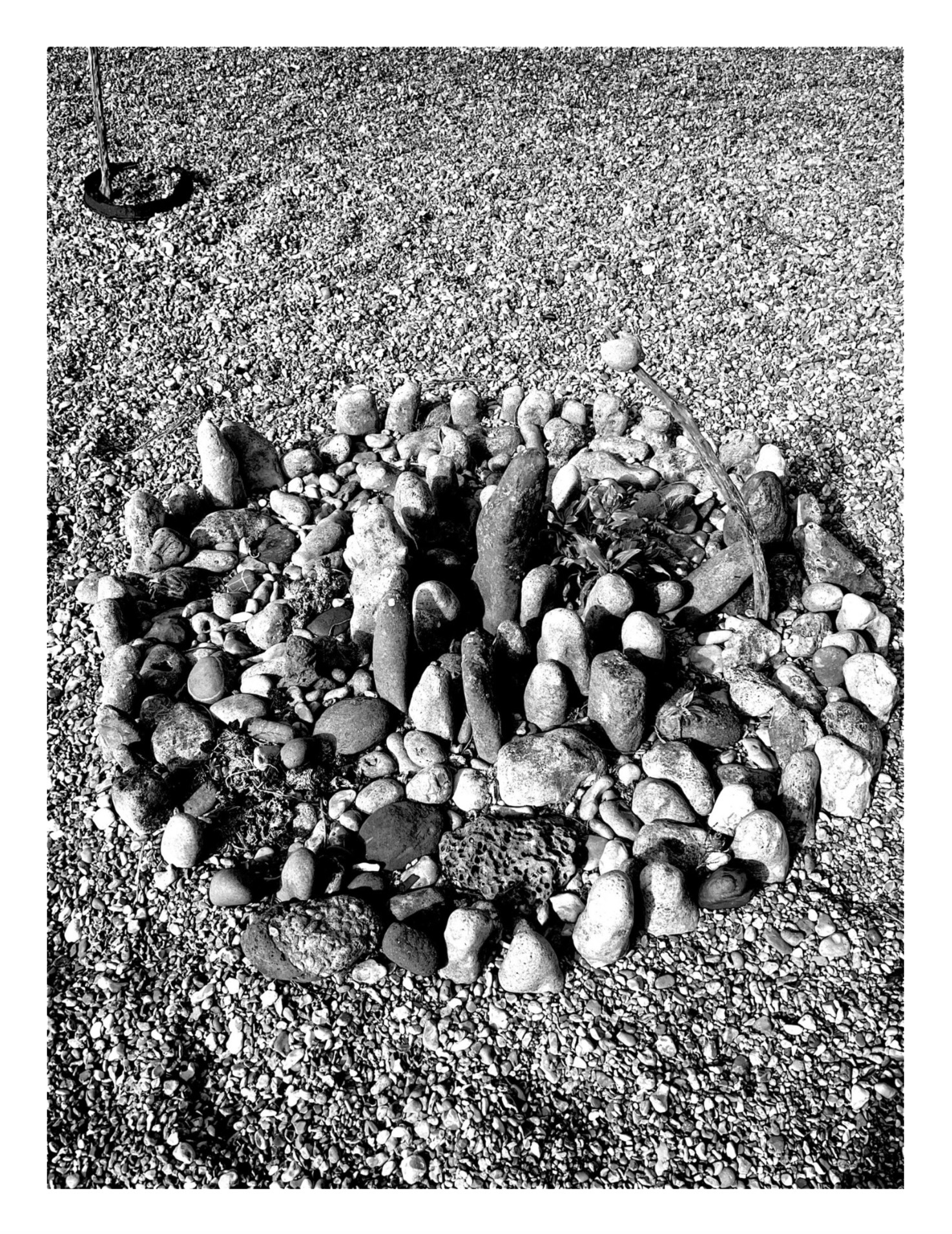
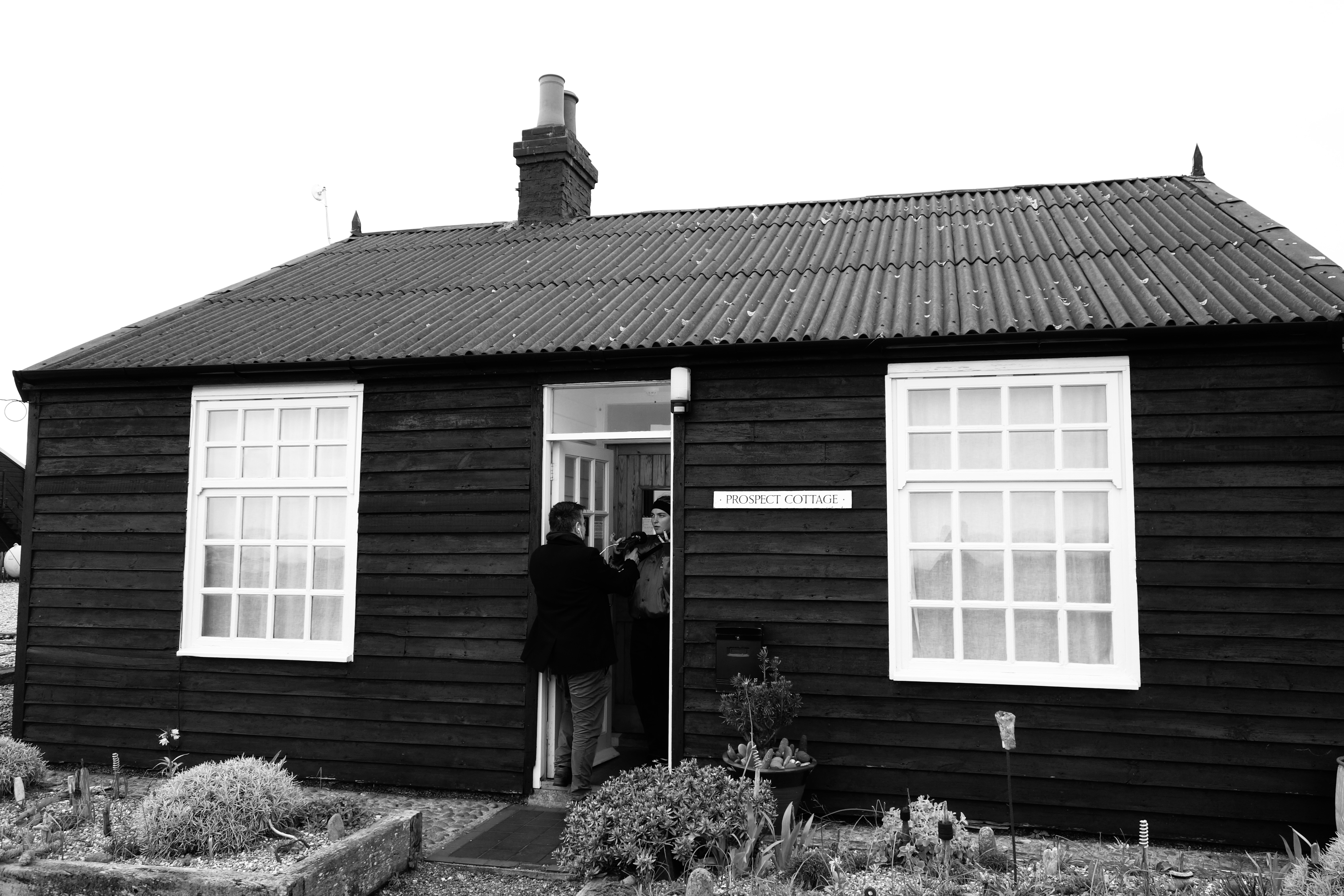
At the start of spring, Prospect Cottage is surrounded by daffodils, the same abrasive yellow decorates the black cottage’s window frames. Once the home of the late Derek Jarman, artist, filmmaker, and activist who died after a 6-year battle with AIDS in 1994. Jarman spotted the cottage whilst hunting for bluebells with actress Tilda Swinton, buying it shortly after his diagnosis of HIV. The cottage has become a site of pilgrimage, the site where Jarman lives out his final years and the subject of his journals, collected into his book ‘Modern Nature’. His garden here is a survivor garden, his own but also a place of refuge and regrowth in the harsh expanse of Dungeness’ desert conditions, made with offcuts and found objects along the shingle. 30 years since Derek Jarman’s death, and a local taxi driver tells me that it has since been pillaged of its jewels, likely passers-by or pilgrims looking to take a part of the garden home. It’s full nonetheless, with rusting chains cradling sprouting daffodils, and old tools arranged like fossils in the shingle. This garden is a memory site, a physical place where commemorative rituals take place, each visit itself adds new meanings. To stand in the garden, between the sea and the power station behind, is to feel that tension just as Jarman had during his time at Prospect Cottage. The apocalyptic mirroring of a body clinging to the end of the world, beneath a nuclear giant is chilling. Jarman constructing a garden from beach-washed remnants melded with seeds and stones, is always a dream of what tomorrow could look like. Prospect Cottage is in itself an ‘Art-Time’, building something meaningful, from offcuts of Dungeness’s past, that will change, and regrow far into the future.
I am interrupted by Davide as I crouch within the clusters of daffodils behind the house, the artist in residence at Prospect Cottage at the time of my visit. He holds a large microphone in his hand and wants to interview me about my relationship with the cottage for a film he is working on. He is generous, and we chat about art and memories of Italy where he lives. Davide shared with me two photographs captured in that spot where the camera sits at the back of the garden, in a perspex box. The first photograph was taken in 1995 during his first visit to Prospect Cottage, his first pilgrimage to the garden of his artistic muse. In this photograph, Davide is a young boy, with a bright green hoodie and a necklace that compliments the abstract sculptures and metallic spikes dotted in the garden. He stands at the back of the cottage, framed by the the survivor garden of spikes and stones. He shows me this photograph with pride, it is surreal for him to be this close to the core of Jarman’s legacy, living and working in the cottage for the next two weeks. The second photograph he shows me was taken the previous week, on the first day of his residency. 20 years on, he wears the same necklace—a relic encapsulating two decades of personal and creative evolution. Although these photos are not mine to share here, they embody the essence of what this writing aims to produce. These photos materialise the time between them, physicalise the years like strings to be plucked, played and pulled apart, like a harp. They are portals through which past and present gaze at one another, meeting in the garden and through Davide’s lens.
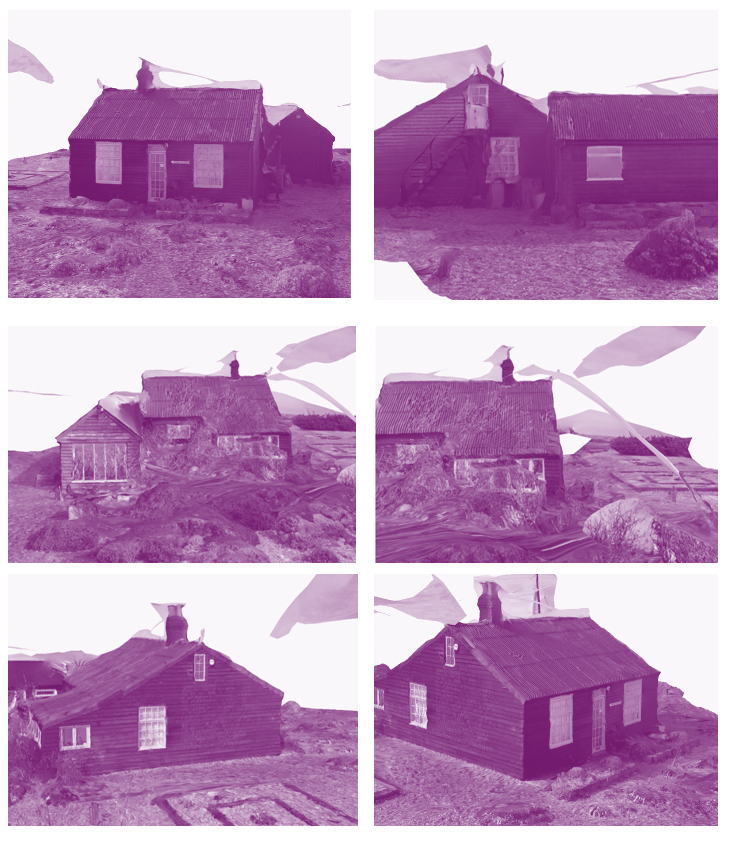
If Davide had shown me that an ‘Art Time’ is strongest in its artefact, I wanted to produce something in the present that felt once removed from it, crafting across temporalities.
I began to scan each memory site I visited, looking to create relics of my own. This 3D scanning software produced models of Prospect Cottage, stuck in a chaotic tangle, stripped of its sculptures like a scrap heap, plants and weeds having overridden any evidence of the gardener’s hand. Behind the house, a staircase has collapsed, and the sign on the front of the cottage is no longer visible. The scans are a haunted warning of what care is required to upkeep these sites of memory. In 2020, as COVID-19 began dominating headlines, with lockdowns imposed and life freezing in its place, Art Fund raised £3.5 million to save Prospect Cottage from being sold privately and its contents dispersed. The cottage, an isolated site of hope and resilience, mirrored a collective experience of grief, fear, and isolation. Art Fund’s efforts to preserve Jarman’s legacy highlight a deep recognition that protecting the most delicate elements of our archives is vital for shaping future possibilities. Memory sites must live on, and while this one will, many others lack the same public awareness and support. Art matters because it connects us to these memory sites—through prose, fiction, film, painting and music. Our cherished artefacts guide us to these places, where pilgrimages and rituals help shape our understanding of the future through the lens of our past.
I returned to Prospect Cottage before I set off to speak to Davide, and asked him to join me on a visit to Derek Jarman’s grave at St. Clement’s Church. Without a bike, he couldn’t come with me but we exchanged numbers and I am grateful to say he is now a friend of mine. I set off in the rain this time, marking a return out of the archive back into the world. The church in Romney Marsh was empty. I left a small relic from my pilgrimage on Jarman’s headstone, alongside offerings from others who had come before.
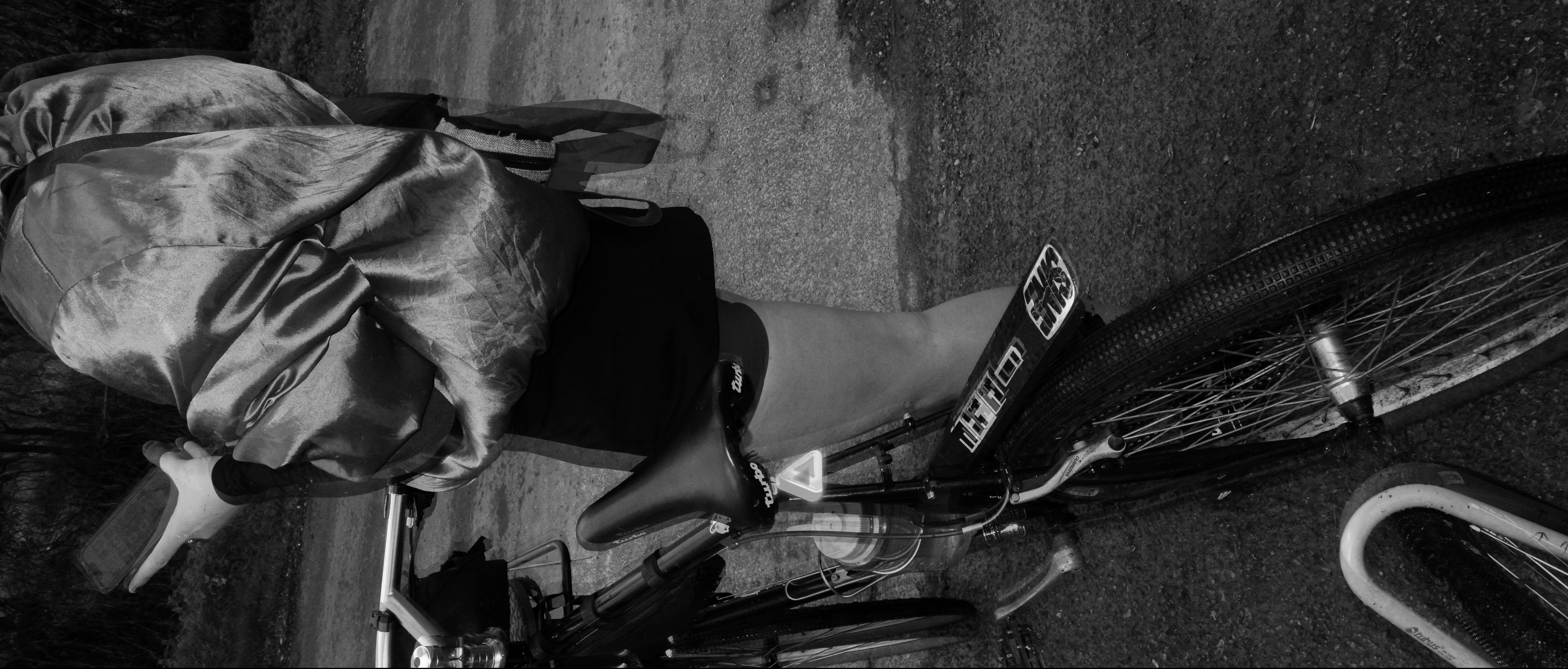
We produce and reproduce our own history.
A glorious loop of nostalgic grief.
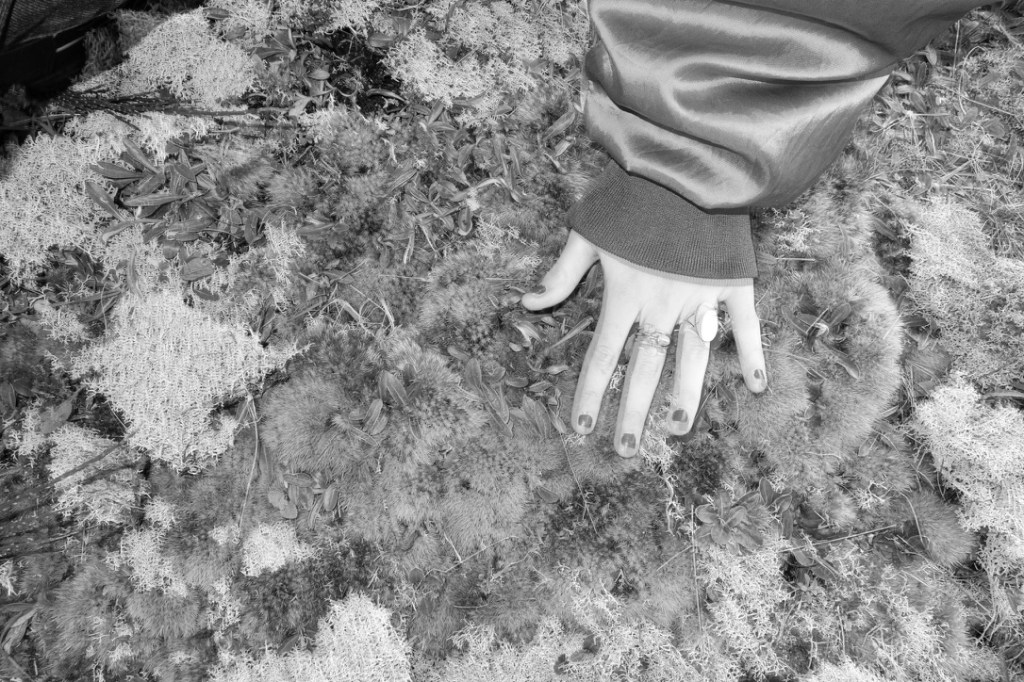
Thank you to the wonderful Davide Pepe @davidepepe93 for sharing part of your journey with me. I’m happy to now call him a friend.
Thank you to Jakob @jjjjjjjakob for these lovely photos
 lonely disco dancer